2026-11-19 · Luis Morales
How Cedar Pollen Affects Air Ducts In Austin Homes
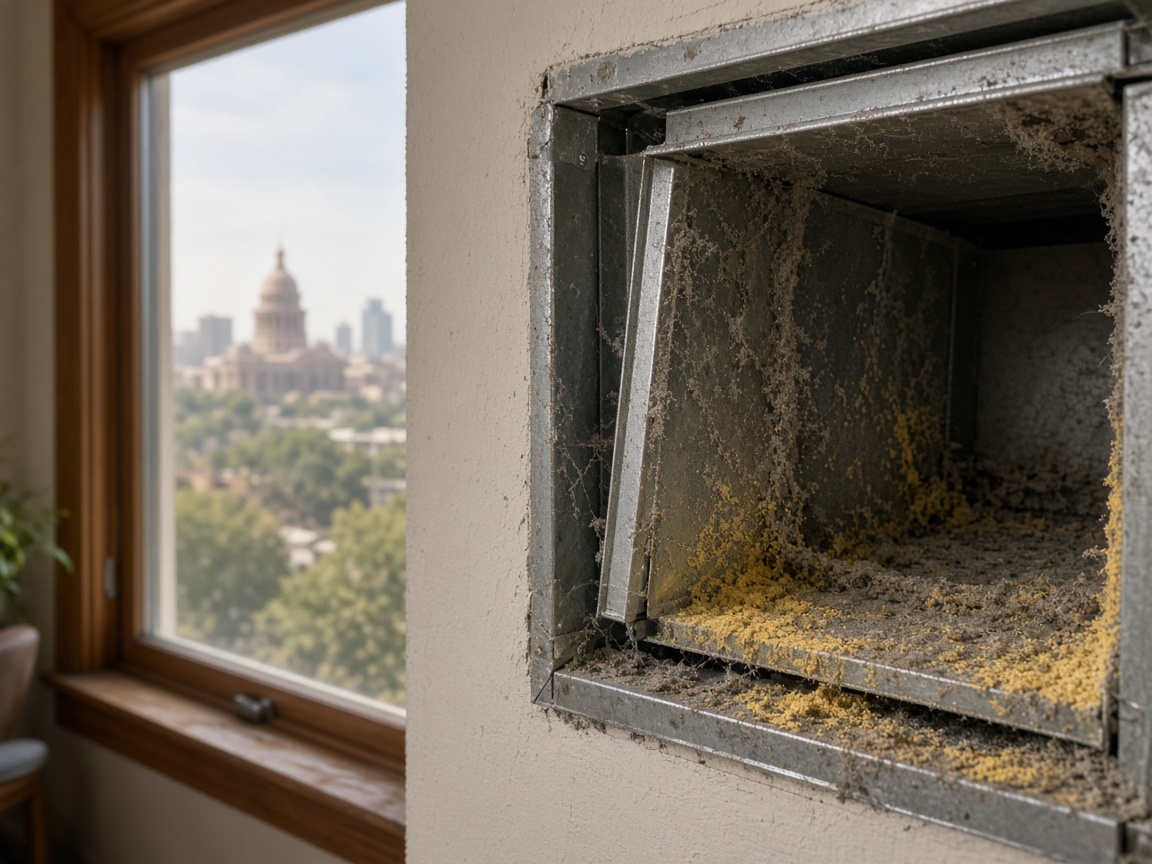
Cedar pollen can coat Austin duct interiors with layers thick enough to cut airflow 15-25 percent in homes across Travis County once winter temperatures drop and mountain cedar releases pollen from December through March.
How Cedar Pollen Travels Into Austin Ductwork
Austin’s mild winters let cedar trees pollinate earlier than most regions, sending microscopic grains into homes through open windows and intake vents. In neighborhoods such as Clarksville and Barton Hills, older single-story houses with unsealed returns pull in heavy loads during peak bloom. The pollen mixes with household dust and travels through the same metal runs that serve central air handlers. Once inside, the sticky grains cling to interior walls, especially where bends slow air speed. Over repeated seasons this film builds until the blower must work harder to push the same volume of air. Residents in East Austin and Mueller often notice the first signs when filters load faster than in summer months.
Impact On Airflow And Indoor Air Quality
Thick pollen deposits narrow the effective diameter of supply and return runs, raising static pressure and forcing the blower motor to run longer cycles. In homes near Lady Bird Lake or Zilker Park, where cedar stands line nearby hills, this restriction shows up as uneven temperatures between upstairs and downstairs rooms. The trapped pollen also becomes a secondary allergen source; every time the system starts, particles re-enter living spaces instead of staying outside. Homeowners in Westlake and Travis Heights report increased sneezing and sinus pressure during February and March when pollen counts exceed 5,000 grains per cubic meter. Because the material is lightweight, it travels past standard fiberglass filters and settles deeper in the trunk lines.
Seasonal Patterns Specific To Travis County
Spring wildflowers arrive after cedar season ends, but the winter pollen load sets the stage for later mold growth once humidity rises in April. Round Rock, Pflugerville, and Cedar Park share the same cedar belt, so residents who commute into Austin often bring similar issues into their systems. The combination of mild daytime temperatures and cool nights keeps systems running in both heating and cooling modes, circulating pollen continuously. In South Congress and Downtown condos with shared rooftop units, one contaminated branch can affect multiple units when fresh air dampers open during shoulder seasons. Regular filter changes every four weeks during peak months help slow accumulation but do not remove what has already adhered to duct walls.
When Professional Cleaning Becomes Necessary
Visible gray or yellow streaks around ceiling registers and musty odors when the fan starts are reliable indicators that pollen has moved beyond what filters can manage. Residential air duct cleaning restores original airflow by removing the compacted layer without damaging flex or rigid runs common in Austin’s 1960s-1980s housing stock. Homeowners comparing options can review cost factors for air duct cleaning in Travis County to understand variables such as access points and linear footage. After cleaning, sealing return leaks in attics prevents future infiltration during the next cedar bloom. Checking the system again after summer, as noted in signs your Austin ducts need attention after summer, confirms whether new pollen has begun to collect.