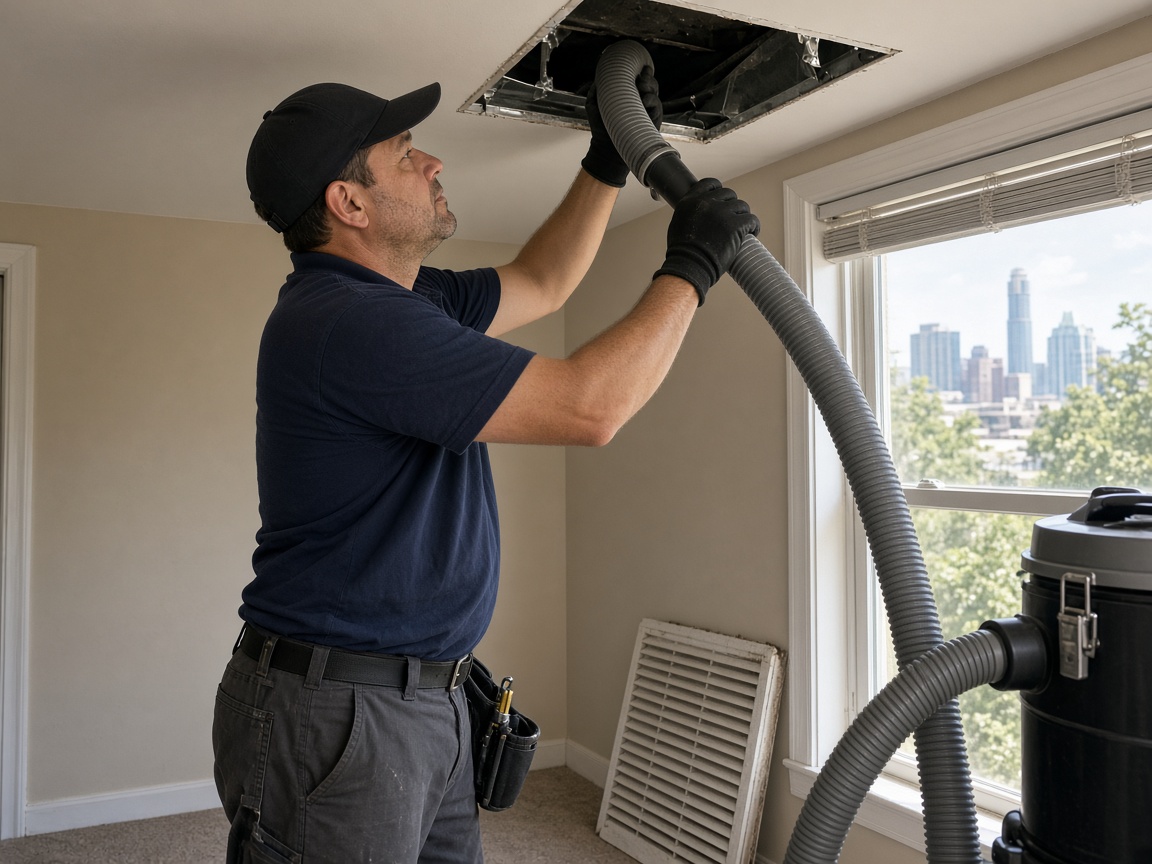
Austin's older homes in Clarksville, Hyde Park, and Travis Heights often retain original ductwork installed decades ago that collects fine dust, pollen, and construction debris from nearby builds. Hot humid summers drive extended AC runtime, pushing moisture through metal ducts and creating conditions where mold colonies form on interior surfaces. Technicians working these properties must account for tight attic access in bungalows and the risk of disturbing settled material that can re-enter living spaces if negative pressure is not maintained throughout the job.
East Austin and Mueller properties frequently feature flex duct runs that sag or compress over time, trapping lint and reducing airflow more than rigid metal systems common in Westlake. Spring wildflower pollen loads the filters and ducts heavily each March and April, requiring crews to use HEPA-filtered equipment when cleaning to prevent redistribution. Post-remodel homes in South Congress and Zilker commonly need extra passes to remove drywall dust that settles in supply trunks before new registers are installed.
Technicians serving Barton Hills and Downtown condos watch for shared chases that connect multiple units; disturbing one system can push particles into neighboring homes if isolation is skipped. Mild winters keep systems running year-round, so seasonal deep cleans focus on evaporator coil proximity and return plenum buildup rather than winter-only issues. Crews always verify register boot seals after cleaning because Austin's shifting clay soils can crack connections in older slab homes.
Round Rock and Pflugerville homes built on larger lots often have longer horizontal runs that require multiple access points. Cedar Park properties with spray-foam attics trap heat and humidity differently, changing how quickly dust cakes on duct interiors compared with vented attics in central Austin.
Technician insight
In Austin the thing that catches most people out with residential air duct cleaning is how quickly pollen from spring wildflowers packs the return plenums in homes near Zilker Park and Barton Springs Pool; one season of open windows followed by heavy AC use can double the material we pull compared with homes in drier parts of Travis County.
Hyde Park Bungalow Ducts
Homeowner noticed reduced airflow and musty smell after a wet spring. Inspection revealed compressed flex runs and pollen caked in the main return in the attic. Crew isolated the system, agitated and extracted debris through two access points, then resealed the boots. Airflow returned to normal and the odor disappeared.
Residential Air Duct Cleaning Services We Offer
✓Whole Home Air Duct Cleaning
Removes accumulated dust and pollen from supply and return runs throughout single-family homes in Travis County neighborhoods.
✓Dryer Vent Cleaning
Clears lint buildup from dryer exhaust lines to reduce fire risk and improve drying times in older Austin bungalows.
✓Attic Duct Inspection and Sealing
Identifies gaps and damaged flex runs in attics common to East Austin and Mueller homes before full cleaning begins.
✓Post-Renovation Duct Cleaning
Extracts drywall dust and construction debris from ducts after remodels in South Congress and Zilker properties.
✓Bathroom Exhaust Fan Cleaning
Removes moisture-laden buildup from vent lines that serve baths in humid Austin summers, improving indoor air quality.
✓Allergen Reduction Duct Service
Focuses on pollen and dander removal from returns in homes near Lady Bird Lake and Zilker Park where seasonal loads are high.
Residential Air Duct Cleaning Cost in Austin, TX
| Service | Typical Range | What Affects It |
|---|---|---|
| Single-Story Home | $350–$550 | Standard access in neighborhoods like Hyde Park or Zilker |
| Two-Story Home | $450–$750 | Additional time for attic stairs and multiple trunk lines |
| Dryer Vent Add-On | $125–$200 | When performed same day as main duct cleaning |
| Post-Renovation Service | $400–$650 | Extra passes required for drywall dust in South Congress remodels |
Ranges are typical for Austin, TX and confirmed with an exact written quote before any work starts.
How it works
- 1
Initial System Inspection
Technician maps every accessible trunk and branch in the attic or crawlspace while noting duct material, access points, and any visible moisture staining.
- 2
Negative Pressure Setup
HEPA vacuum is connected to create containment so loosened material moves only toward the collection point rather than into living areas.
- 3
Mechanical Agitation And Extraction
Rotating brushes and compressed air tools dislodge debris along each run while the vacuum pulls material out through the main trunk.
- 4
Final Register And System Check
All registers are removed, cleaned, and reinstalled; airflow is verified at each vent before the system is returned to normal operation.
Pricing
Pricing varies by home size, number of stories, and duct access difficulty in Travis County neighborhoods.