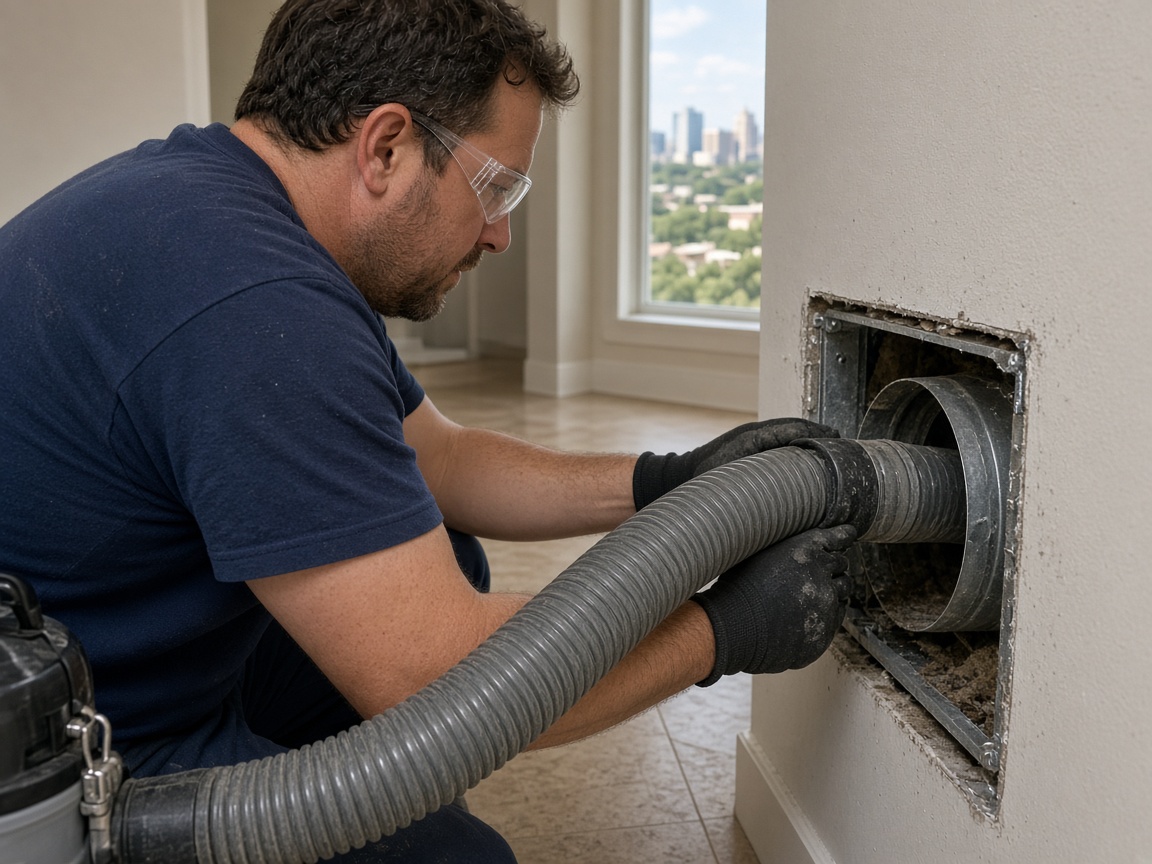
Austin's hot humid summers drive condensation inside metal ducts, especially in homes built before the 1980s in Hyde Park and Clarksville. Moisture mixes with cedar pollen and wildflower spores that peak each spring, creating sticky layers that standard filters miss. In Travis County neighborhoods with mature tree cover like Barton Hills and Travis Heights, outdoor debris enters through roof vents and settles in return plenums. Technicians often find restricted airflow in these older systems because original flex duct runs were never sized for today's higher cooling loads.
East Austin and Mueller properties frequently have attic ductwork exposed to temperature swings that cause seams to separate over time. When humidity spikes, those gaps pull in dust from the crawlspace or attic insulation. Cleaning crews must use negative-air machines with HEPA filtration to prevent redistributing particles into living spaces near Lady Bird Lake or Zilker Park, where many homes sit on sloped lots that complicate equipment staging.
Round Rock and Pflugerville subdivisions built in the 1990s often use rigid metal trunks with flexible branch runs that trap pet dander and construction residue. Mild winters keep systems running year-round for dehumidification, so even small blockages raise energy use. Local techs check for collapsed flex duct near the air handler before any brushing begins, because pulling on damaged sections can create new leaks that affect upstairs bedrooms in two-story homes.
Westlake and Cedar Park homes with large HVAC systems require longer vacuum hoses and multiple access points to reach every branch. Technicians remove supply registers first to clear lint that accumulates from nearby construction dust blown in during area growth. This step prevents recontamination after the main trunk is cleaned.
Technician insight
In Austin the thing that catches most people out with HVAC duct cleaning is how quickly cedar pollen and spring wildflower spores stick to damp duct walls once summer humidity hits. Older homes in Hyde Park and Travis Heights often have original flex runs that collapse when you pull on them, so you have to work slower and sometimes open the attic ceiling to reach the main trunk.
East Austin return plenum blockage
Homeowner noticed weak upstairs airflow after a wet spring. Inspection found the return plenum packed with pollen and insulation fibers that had entered through a separated seam. Negative-air cleaning plus seam repair restored full airflow without replacing the original trunk line.
HVAC Duct Cleaning Services We Offer
✓Residential Duct Cleaning
Removes pollen, dust, and humidity-driven residue from supply and return lines in single-family homes across Travis County neighborhoods.
✓Dryer Vent Cleaning
Clears lint buildup from vent lines that run through attics, reducing fire risk in homes with long horizontal runs common in East Austin and Mueller.
✓Commercial Duct Cleaning
Services rooftop units and larger trunk systems in small offices and retail spaces in Downtown and South Congress districts.
✓Attic Duct Inspection
Identifies separated seams and collapsed flex runs in attic installations exposed to Austin's temperature swings before full cleaning begins.
✓Return Air Plenum Cleaning
Targets the main return box where outdoor pollen and insulation fibers collect in older Hyde Park and Clarksville homes.
HVAC Duct Cleaning Cost in Austin, TX
| Service | Typical Range | What Affects It |
|---|---|---|
| Standard single-story home | $350–$500 | Up to 8 vents, main floor access only |
| Two-story or attic duct home | $450–$700 | Extra time for ladder work and longer hose runs |
| Dryer vent add-on | $125–$200 | When performed same day as duct cleaning |
| Commercial small office | $600–$950 | Rooftop unit access and larger trunk lines |
Ranges are typical for Austin, TX and confirmed with an exact written quote before any work starts.
How it works
- 1
System Assessment
Map all accessible trunk lines and branch runs, checking for collapsed flex duct and moisture stains common in humid Austin attics.
- 2
Register Removal
Take off every supply and return register to clear visible lint before negative-air equipment starts.
- 3
Agitation and Extraction
Use rotating brushes and compressed air while the vacuum pulls debris through the main trunk to the exterior.
- 4
Final System Check
Reinstall registers, verify airflow at each vent, and confirm no new leaks were created during the job.
Pricing
Most Austin homes fall between $350 and $650 depending on system size and access.